

Spices trading licence, wholesale, shop or own label
A spices trading licence in Dubai also covers coffee and tea, as wholesale to businesses or as a specialist shop.
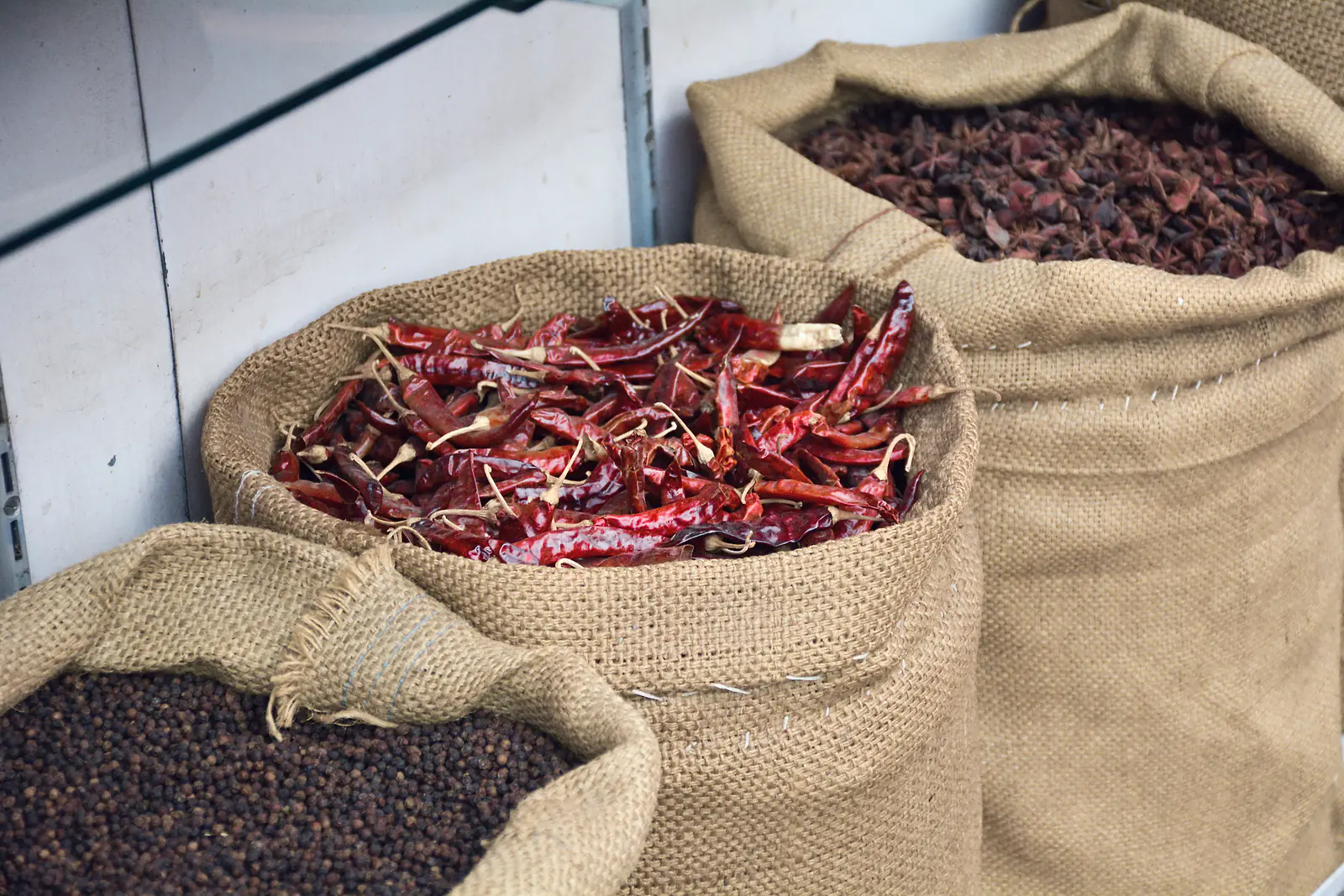
- Usual route
- Mainland or free zone
- Extra approval
- Dubai Municipality
- Timeline
- Weeks
- AML
- Not a DNFBP activity
A spices trading licence in Dubai covers coffee and tea too, under one of two activities. Wholesale supplies businesses and re-export buyers, while a specialised trading activity covers selling to shoppers. Each product is registered with Dubai Municipality before it ships. Grinding, roasting, blending or repacking into your own label needs more than a trading licence.
- Covers
- Coffee, tea, cocoa and spices, sold in bulk or by shop
- Not covered
- Grinding, roasting, blending, own-label repacking and serving drinks
- Premises
- An approved food store or shop; a production unit for processing
- Timeline
- Weeks, led by product registration; the licence itself takes days
What a spices trading licence covers
Coffee, tea, cocoa and spices share one wholesale activity. Selling them to shoppers from a shop is a separate trading activity.
Covered
Not covered
- Covered by Cafe
- Covered by Food manufacturing
- Covered by Foodstuff trading
- Covered by Grocery and supermarket
Tick what you plan to do. The result shows here.
We fix the wording before you apply. Send us your list on WhatsApp
Many traders do both. We put both activities on the licence when your first buyers include businesses and shoppers.
Re-export hub or Dubai buyers
Stock that passes through Dubai sits well in a free zone store. Supplying Dubai cafes and shops, or opening a shop, points to DET.
| If most of your clients are | Likely route | Why |
|---|---|---|
| Buyers abroad, goods re-exported from Dubai | Free zone | Bulk storage and re-export run smoothly from a free zone warehouse |
| Cafes, hotels and supermarkets across Dubai | Mainland (DET) | Local food wholesale is regulated, so a DET licence is the usual fit |
| Shoppers at your own spice shop | Mainland (DET) | A street or mall shop sits on the mainland under DET |
| Re-export buyers and Dubai cafes together | Either route | A free zone company with a DET branch can serve both books |
A free zone trader can reach Dubai buyers through a DET branch licence or permit (Executive Council Resolution 11 of 2025). Sales to mainland buyers face the QFZP qualifying test.
Several free zones license this activity; we match the zone to your visas, office and banking. Compare free zones
Three questions. The closest row is marked in the table above.
Your likely route shows here.
Approvals before the first container
The licence is the quick part. Dubai Municipality then registers each product, with its Arabic label, before the consignment reaches the port. The store or shop holding the stock is approved as a food establishment.
Before the licence
- Trade name and initial approvalDET
The licence
- Trade licence with the activityDET
Alongside the licence
- Store or shop food approvalDubai Municipality
- Food trade person in chargeDubai Municipality
After the licence
- Registration of each productDubai Municipality
- Consignment release at the portDubai Municipality
- Corporate bank accountThe bank
We time the registrations to the supplier's loading date.
Which activity does each part of your plan need?
Tick what you plan to do in your first year. The heaviest line shows how far the file reaches past a trading licence.
A grinder in the back of a shop turns a trading file into a production file, so we settle it before the lease is signed.
Tick everything the business will do
| What you plan | Points to |
|---|---|
| the wholesale activity for coffee, tea, cocoa and spices | |
| the wholesale activity for coffee, tea, cocoa and spices | |
| a specialised trading activity for selling to shoppers | |
| an approved packing unit, with each new pack registered as its own product | |
| a manufacturing activity and a production unit the municipality approves | |
| a manufacturing activity and a production unit the municipality approves | |
| a cafe licence, with its own layout approval |
Tick a line to see where your plan points.
What the bank asks a spice trader
Bank viewSupplier payments abroad and origin countries checked closely
Banks read this trade through the lens of trade-based money laundering. Money leaves for growers and exporters abroad. It comes back in many smaller payments from cafes, shops or re-export buyers. Expect questions on origin countries and buyers, and on how invoices match the bills of lading. Origins are screened against sanctions lists. We put the supplier list, sample invoices and the first shipping plan into the bank file.
AMLNot a DNFBP activity; the bank's own customer checks still apply.
Where spice and coffee files go wrong
A grinder behind the shop counter
Grinding, roasting and blending count as processing. An inspector who finds a grinder in a shop licensed for trading sees an activity the licence does not hold, and the unit was never approved for production.
Own-label jars on the old registration
Repacking bulk turmeric into your own jars creates a new product. The jar needs its own registration, because the label has changed, and the repacking has to happen in an approved food unit.
Poppy seeds in a mixed consignment
Poppy seeds, khas khas in Indian kitchens, are treated as a narcotic in the UAE. One carton can hold a whole mixed container at the port. We read the packing list line by line.
Questions about a spices, coffee and tea trading licence
A question about your plan? Describe your spices, coffee and tea trading plan and an advisor replies on WhatsApp.
Ask on WhatsAppHow much does a spices trading licence cost in Dubai?
How to start a spice business in Dubai from India?
What are the tea trading licence requirements in the UAE?
Do I need a licence to sell coffee online in Dubai?
Related pages
 ActivityFoodstuff trading licence in DubaiThe licence is quick, but each product has to be registered with Dubai Municipality before its consignment reaches the port.
 IndustryImport and export business setup in DubaiAn import export license in Dubai is decided at the customs line: mainland or free zone, the customs code, re-export rules and the bank that clears you.
 ActivityCafe and coffee shop licence in DubaiWhat you serve sets the licence activity, and Dubai Municipality has to approve the unit's layout before any fit-out starts.
Wholesale, shop or own label for your spices? We map it against your first container
Fifteen minutes with a senior advisor on your products, buyers and any packing plans. You leave with the activities, the route and the order of approvals before the first shipment.
On the call
- The activity wording that fits your plan
- The route, and the approvals in order
- A written quote before any work starts
